We sit beside bridges and walk beside fountains,
Catch the wild fishes that float through the stream,
Time passes slowly when you're lost in a dream.
Over the past few weeks, there have been
 no shortage of articles written about the 40th anniversary of Woodstock. And certainly one of the most interesting is Jon Pareles’ story that appeared in Sunday’s New York Times two weeks ago.
Ironically, what made the article so striking wasn’t so much
 what was said about the Woodstock generation of 1969; it’s what wasn’t said about the Obama Nation of 2009. As Pareles observes: “Woodstock was as much an endpoint as a beginning, a holiday of naïveté and dumb luck before the realities of capitalism resumed.”
And while he draw no direct parallels drawn
 between the 400,000 people who went up the country 40 years ago August 1969, and the two million people who descended on the National Mall this past January, the correlation certainly exists. Just don’t expect the White House to make the connection anytime soon.
 For the hundreds of thousands who stormed the gates of Yasgur’s farm, Woodstock was always more than a 3-day music and arts festival. For them, it was a movement that had been growing for the better part of a decade. And by the time they got to Woodstock, they were literally a half a million strong.
But it wasn’t just the artists and attendees
 who viewed Woodstock through rose-colored glasses. Thanks to the film released by Warner Bros. the following year, that’s the way most of the world saw it, too.
 Of course in process of condensing 72 hours into a 4-hour film the studio would release, a lot was left on the cutting room floor. And it’s those forgotten pieces that tell not only the real story of Woodstock, but offer a cautionary tale for the newly anointed president.
So enamored are we with the mythology of Woodstock that we tend to overlook the fact that
 the promoters of the fabled 3-day festival completely lost control of their creation. The result? The site was declared a national disaster site less than a day into the event. And while Obama had the winds of generational change at his back last November, he, too, has walked smack dab into a national disaster. And just as the concert promoters had to be bailed out by the federal government, the Obama Nation has suffered
 the same fate to the tune of of a $787 stimulus package intended to assauge the beleaguered economy. The only difference is that while the Woodstock crowd got a free concert, the Wall Street looters who brought this country to its knees are the ones who got a free ride.
And what about the corporate greed? Again, the similarities abound.
In the case of Woodstock, the moment the contact high wore off, the feel-good euphoria
 sparked in those three days of peace, love and understanding immediately gave way to a perpetual commoditization. Not only the sense of community Woodstock engendered, but an endless quest to commoditize the Woodstock name itself.
 Similarly, Barack Obama has suffered the same fate. His name, his likeness, his promise to renew our faith in our government and ourselves has become fodder for a seemingly endless supply of T-shirts, bumper stickers and faux campaign buttons.
  Said another way, in the months since his election, Barack Obama has become more than a president; he has become a brand. The commoditization of the Obama Nation has begun.
Just as that iconic image of that lone white dove on the guitar neck will always evoke a sense of idyllic idealism,
 Shepard Fairey’s equally iconic image of Barack Obama will be used for generations to come to evoke a similar sense of sanguine certainty that things will get better.
Much has been made over those who graced the stage at Woodstock. After all, the event wasn't the only thing mythologized over the last 40 years. Similarly, much has also been made of those who did not grace Woodstock with their presence.
Among the biggest stars not to trek through
 the mud and the sludge was Bob Dylan. Apparently, Dylan gave some thought to making an appearance (he was living in the neighboring town at the time, after all). But ultimately, Dylan couldn’t seem to get past his animosity toward the
  fans who had crowded in on his newly adopted domestic lifestyle by constantly dropping by his house at all hours of the night. Of course, the excuse Dylan himself gave was much more pedantic: his son was sick that day.
Whether it was overzealous fans or a child on the mend, in the end Dylan probably made the right decision not to attend Woodstock.
Sure, Woodstock transformed many of the artists
 who performed into cultural icons. But by 1969, Dylan was already an icon. And besides, part of the reason Dylan retreated to Woodstock in the first place was to shake that ‘voice of a generation’ label the folkies had pinned on him. What could he
  possibly have gained from being lumped in with 400,000 people whose biggest claim to fame 40 years later is that they managed to make it through three days mired in a cow pasture filled with mud and manure?
 And so, as we peer through the purple haze of the past and peel back the layers of the Woodstock legacy, perhaps the real legacy of Woodstock has as much to do with excess as with idealism.
 Interesting how history really does tend to repeat itself …
Time passes slowly up here in the daylight,
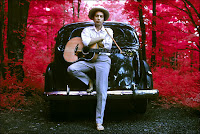 We stare straight ahead and try so hard to stay right,
Like the red rose of summer that blooms in the day,
Time passes slowly and fades away.


 first instinct was that in addition to bailing out the banking, mortgage and car industries, America was about to bailout a certain decrepit despot with whom we've always had a less than amiable relationship. As it turns out, the revolutionary Cuban behind this rather unconventional ‘stimulus package’ is more intent on jump-starting our economy than destroying it.
 A firm believer that the current financial mess facing this country isn’t going to be solved by the crooks on Wall Street or their crooked cronies lurking the halls of Congress, serial entrepreneur and two-time billionaire Mark Cuban wants to cut the Washington fat cats out of the process altogether.
 pieces of criteria (breaking even within 60 days, profitability within 90 days, no advertising, etc.). Either Cuban will fund them, or other individuals reading Cuban’s blog will take up the ideas, thereby stimulating the economy.
 By posting your business plan on Cuban’s blog, you tacitly agree that anyone can comment, criticize and, as Cuban himself acknowledges, “steal the idea and use it elsewhere.”
 Aspiring entrepreneur Alain Raynaud summed up his support in five, succinct words: “Ask and you shall receive.” I’ll be darned if Alain didn’t post his
 those 59 lines on the back of an envelope that today stand the test of time as one of the most searing and unsympathetic indictments of American culture ever written. ‘Like A Rolling Stone’ isn’t just Dylan’s most
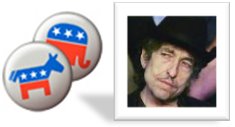
 Yet the soothsayers in Washington tell us that there is no ‘Red States of America,’ there is no ‘Blue States America,’ there is only the ‘United States of America.’


 Eight long years they ran this place
 And Bernard Madoff, he’s in lockdown
 But were it not for her former rival
 Then ran off with the Heisman
 It was the Governor’s tit, however
 But soon his house will shatter

 Kenya was still a British colony in 1961
 the ‘legitimacy’ of the Bob Dylan has been called into question ever since a snot-nosed kid by the name of Robert Zimmerman arrived in New York on a cold winter day in February 1961, and began his own lifelong process of reinvention.
 And though Dylan and Obama are both cloaked in a shroud of mystery, that cloak is cut from distinctly different cloth, two men tailored for two very different times.
 or one of the 56,500,053 who voted for John McCain, at exactly 11:01 West Coast time the mood of a country changed. For a brief, fleeting moment, we were neither Republicans nor Democrats. Conservative nor Liberal. Right nor Left. Ideology evaporated, labels disappeared, color was washed away.
 see us through the dark times that have befallen our nation—Dallas, Memphis, New Orleans, 9/11.



 Posts
Posts


